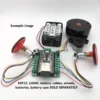
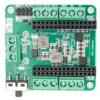
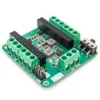
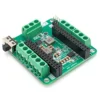
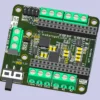
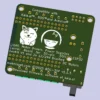
Driver Board for ESP32-DOIT-DevKit-V1, Brushed DC Motors and LiDAR
$35.00
All-in-one board to build an Arduino/ROS2 two-wheel LiDAR ESP32-based robot
In stock
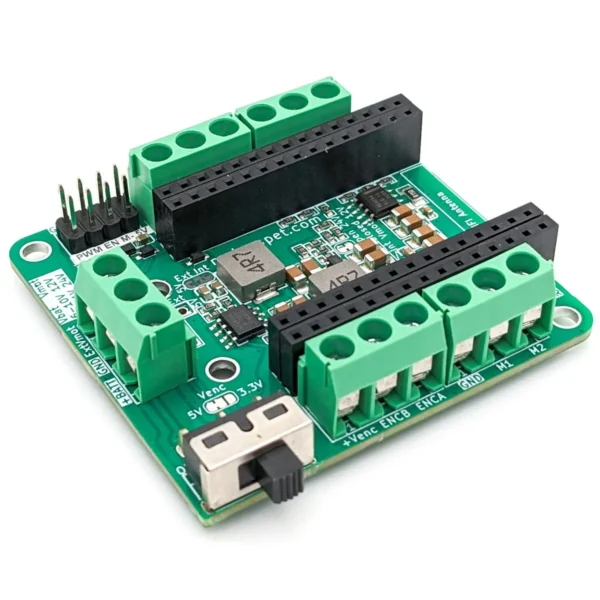
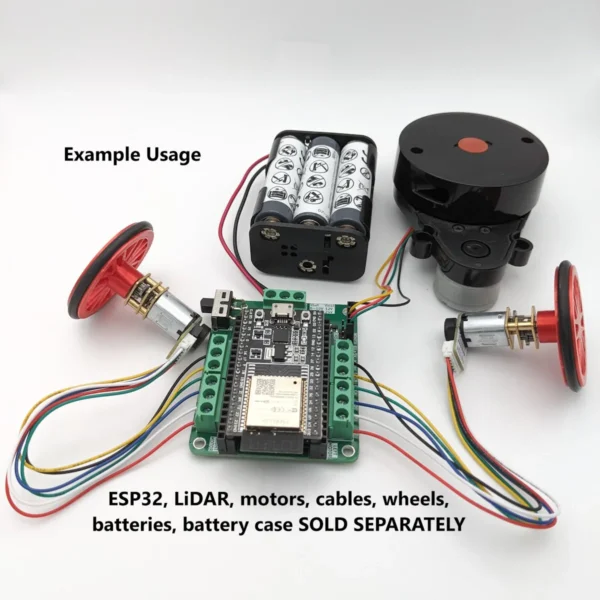
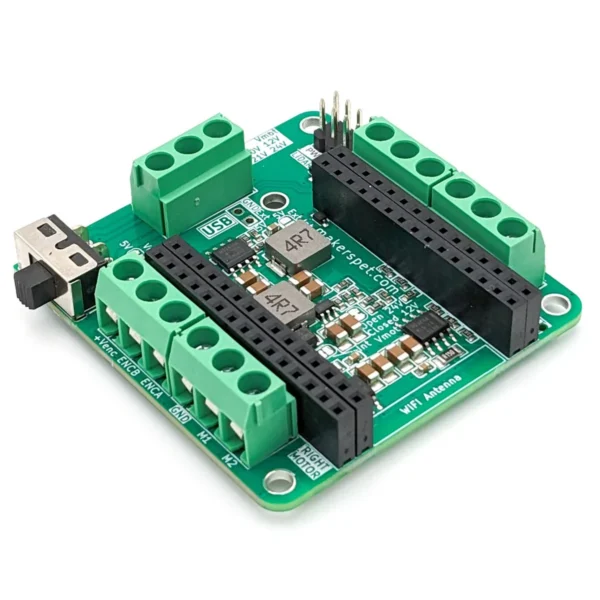
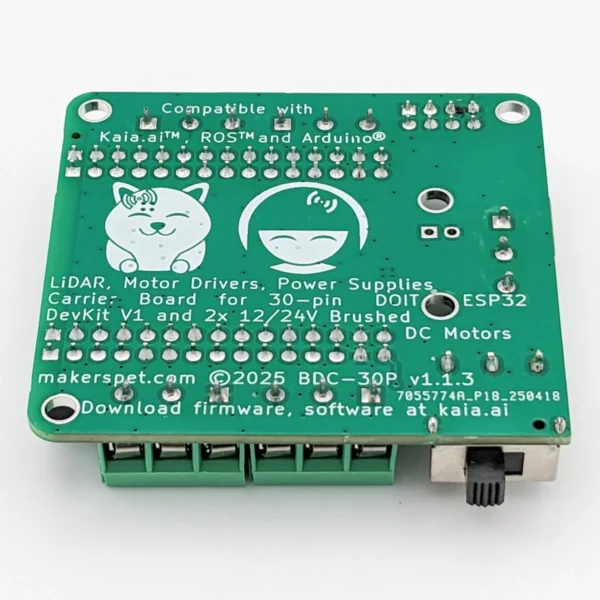
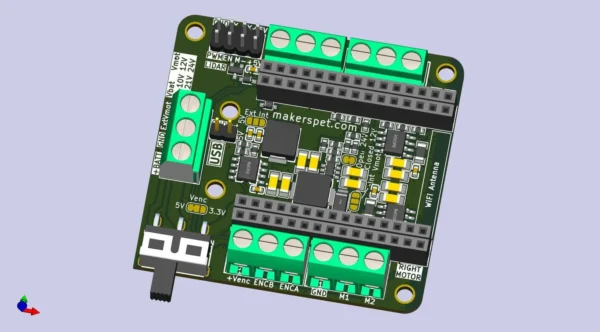
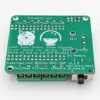
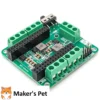
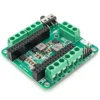
This is an all-in-one board for building DIY robots capable of mapping the environment and self-driving using the map. Think of this PCB as a miniature robot “motherboard” connecting with (sold separately):
- A 2D laser distance (LiDAR) scanning sensor
- Two brushless encoder motors (12V or 24V)
- An ESP32 DOIT DevKit v1 30-pin compatible board with WiFi communication
- A battery
The board is optimized for easy, quick, low-cost robot builds and comes with
- Free, open-source Arduino-based firmware and PC software based on ROS2/Nav2, micro-ROS and Kaia.ai
- Step-by-step usage instruction videos
- An open-source 3D robot body
Recommended Usage:
Build a LiDAR-enabled Arduino/ROS2 robot (parts sold separately):
- Insert a 30-pin ESP32 DOIT DevKit v1 compatible module
- Connect two 12V N20 encoder motors
- Connect a 2D 360-degree LiDAR
- Connect a 9V battery
- Assemble the robot base, wheels and motor clamps
- Upload Arduino-compatible firmware; set up PC software
- Drive the robot around manually or automatically to create a map of your place, see instructions
- Have the robot self-drive around your place using the map, see instructions
Connecting a LiDAR is optional, but highly recommended in order to use mapping and navigation.
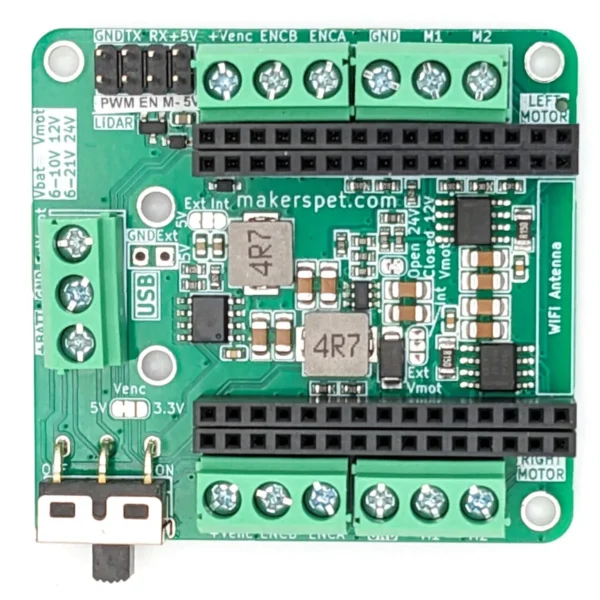
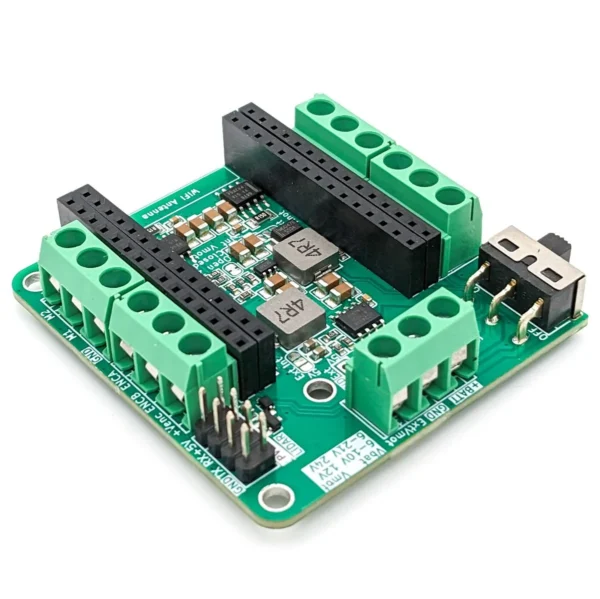
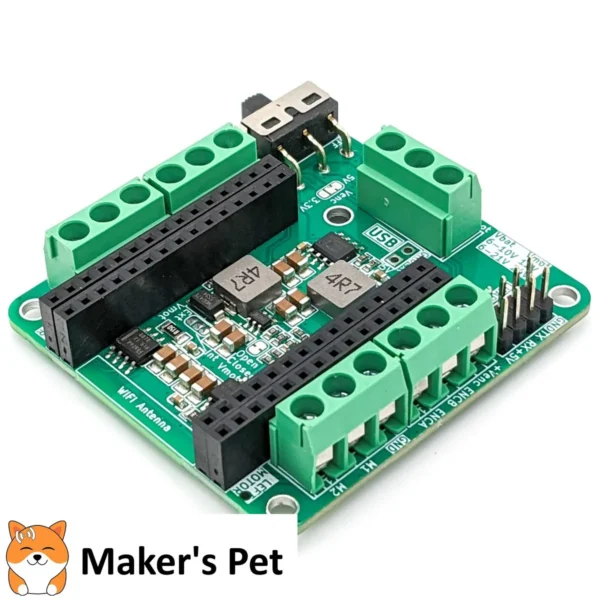
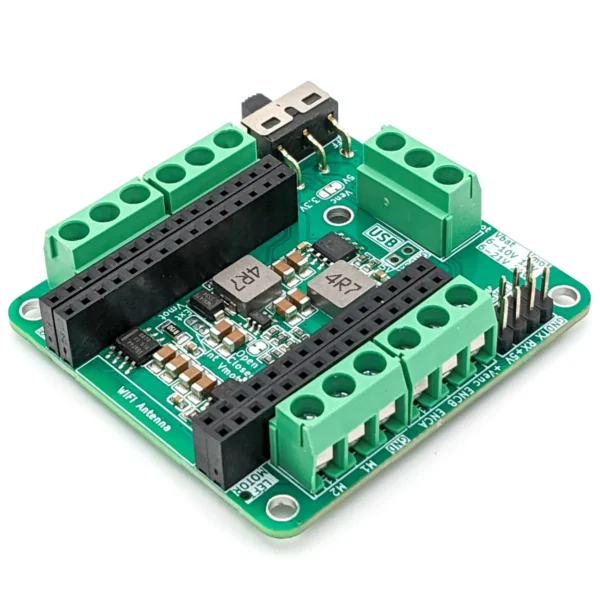
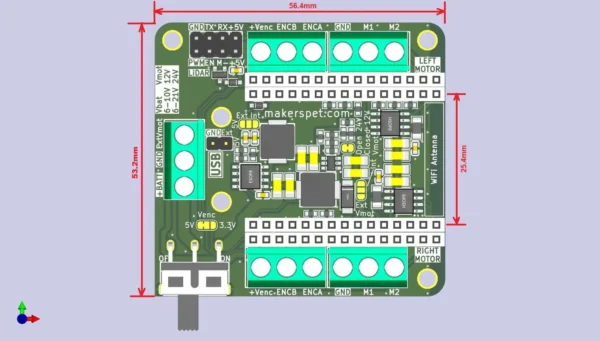
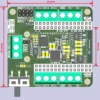
The board contains:
- An integrated motor power supply (12V default, configurable to 24V)
- Two integrated motor drivers for brushed DC motors (low-cost N20 motors recommended)
- Two dual-channel quad encoder interfaces
- A socket for ESP32 DOIT DevKit v1 development board (insert your ESP32 dev kit)
- Additional breakout headers for the ESP32 module (in case you want to add your own custom peripherals)
- A 2D LiDAR interface (with firmware support for more than a dozen popular LiDAR models)
- TX, RX, PWM and LiDAR enable,
- Includes a LiDAR motor PWM FET (for LiDAR models that lack a built-in motor control)
- A 5V regulated power supply for the 2D LiDAR and ESP32
- A circuit enabling ESP32 ADC to monitor the battery voltage
- Terminals for a power supply battery
- A power supply switch
Technical Details:
- Board input voltage range: Vbatt 6V to 21V
- Vbatt 6V to 10V for Vmot=12V motor voltage
- Vbatt 6V to 21V for Vmot=24V motor voltage
- Max total motors current 3A
- Max total motors battery draw 2A
- Individual motor current limit 2.2A
- 5V supply max output current 3.5A
- Max total battery draw 3A
- Do not apply reverse power supply voltage, this can damage the board
Board configuration reference
- JP1 solder jumper selects the motor encoders power supply voltage
- Default: 5V
- Alternative: 3.3V
- JP2 solder jumper selects the on-board regulated motor power supply voltage, Vmot
- Default (closed): Vmot=12V
- Alternative (open): Vmot=24V
- JP3 solder jumper selects the motors power supply source
- default: use the on-board regulated power supply
- alternative: use an external power supply Vext
- JP4 solder jumper selects the 5V power source for LiDAR, ESP32
Revision history
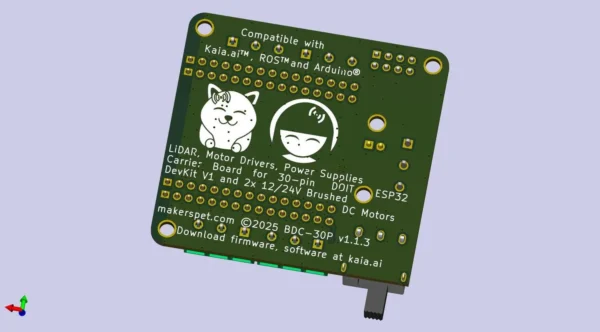
- v1.1.3 identical to v1.1.1 except
- J10 LiDAR header pins 2, 4, 6, 8 changed to accommodate an additional +5V.
- v1.1.1 initial release
Size 53.2mm by 56.4mm by approx.14.5mm. Weight approx. 31g. ESP32 module header spacing 25.4mm.
Documentation
- Complete step-by-step usage example instructions
- Download schematic.
- Download 3D STEP model.
- Download config.yaml configuration file for Kaia.ai firmware.
- How to Connect YDLIDAR X3, X3PRO, X2 and X2L to Maker’s Pet ESP32 Boards
- How to Connect Delta-2G LiDAR to Maker’s Pet ESP32 Boards
Software and Firmware
- View the instructional videos
- Download the Arduino-based firmware here
- Follow the PC software installation instructions
- Read usage instructions here
Technical Support
- Visit our support forum. Both hardware and software questions are welcome.
- View instruction videos on our YouTube channel
- Join our Facebook robotics groups here, here and here (software)
- Join our Reddit forums r/ArduinoAndRobotics and r/MakersPet
Warnings
- Maker’s Pet boards are designed to be used with non-rechargeable alkaline batteries. It is possible to power the boards using rechargeable batteries if you follow proper safety precautions.
- Rechargeable batteries can be dangerous if mishandled.
- Use PROTECTED rechargeable batteries only – with protection from short circuit, 5A peak overcurrent, over-discharge, over-charge, over-heating, and physical damage (e.g. 18650 in steel cans).
- You will need to charge batteries using your own adapter appropriate for your own batteries.
- Your use of rechargeable batteries is AT YOUR OWN RISK.
| Weight | 0.1 lbs |
|---|---|
| Dimensions | 4 × 4 × 2 in |
You may also like…
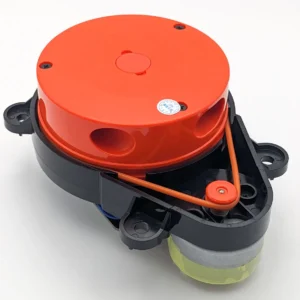
Related products
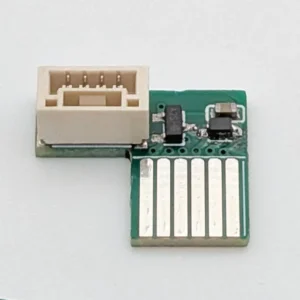
Adapter v0.4 for LDS02RR LiDAR
$6.00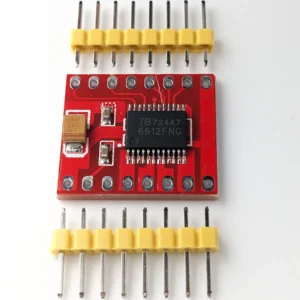
TB6612FNG Motor Driver Breakout Board
Price range: $3.50 through $4.50Select options This product has multiple variants. The options may be chosen on the product page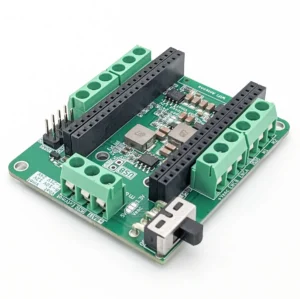
Driver Board for ESP32-DevKitC-V4, Brushed DC Motors and LiDAR
$35.00
Arduino Nano V3
$5.00Select options This product has multiple variants. The options may be chosen on the product page
Reviews
There are no reviews yet.