Adapter v0.4 for LDS02RR LiDAR
$6.00
Connect a Xiaomi LDS02RR low-cost laser distance sensor (LiDAR) to Arduino, ROS2, ESP32, Raspberry Pi.
In stock
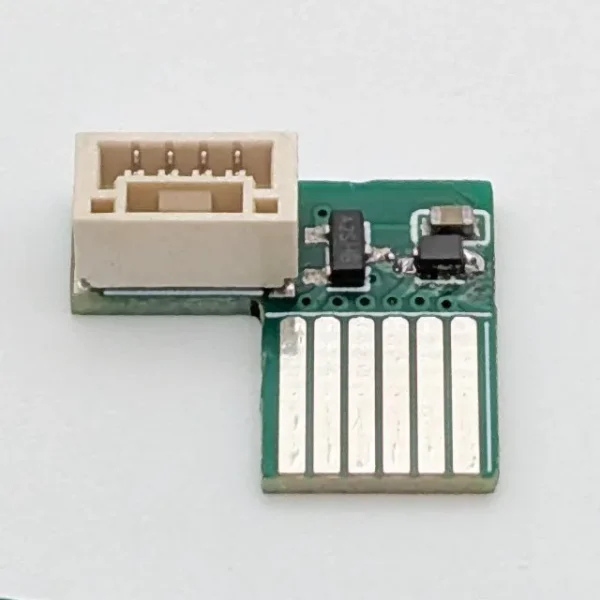
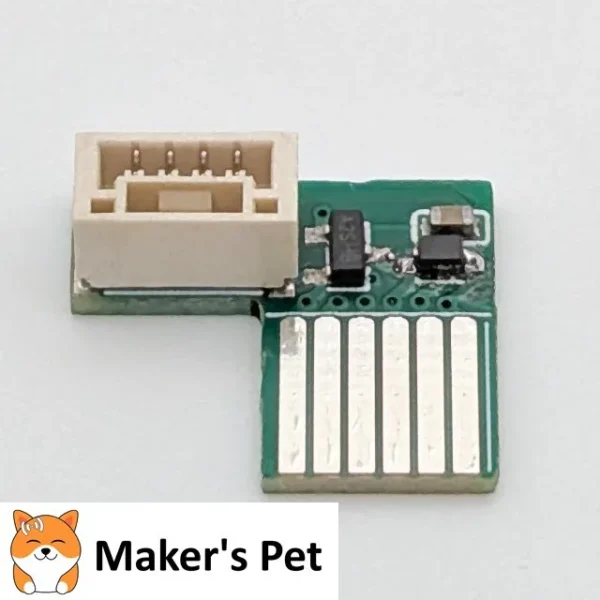
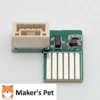
LDS02RR adapter allows you to connect a Xiaomi LDS02RR laser distance sensor (LiDAR) to a microcontroller or micro-computer. The micro-controller can be Arduino-based.
Once connected, you can capture LDS02RR distance output using your computing device, process the distance data and, optionally, forward the data to ROS/ROS2 for visualization, SLAM, mapping and automatic navigation (Nav2).
This product listing includes:
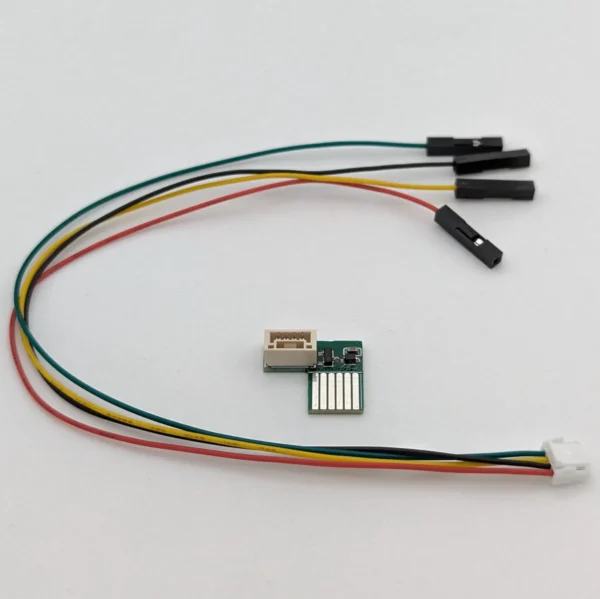
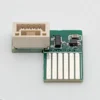
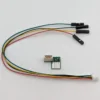
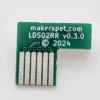
- an LDS02RR adapter PCB v0.4 (LiDAR itself is not included)
- a 20cm JST GH 1.25mm 4pin plug to Dupont 0.1″ female cable
Tutorials
Video: Step-by-Step Bring-up Instructions and Demo
Video: LDS02RR with ROS2 Demo
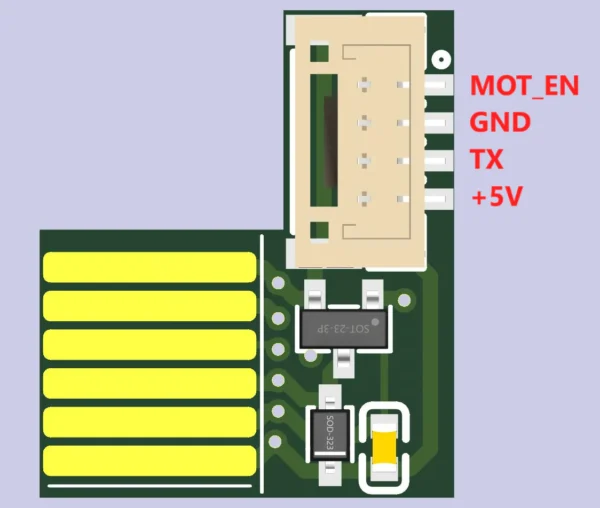
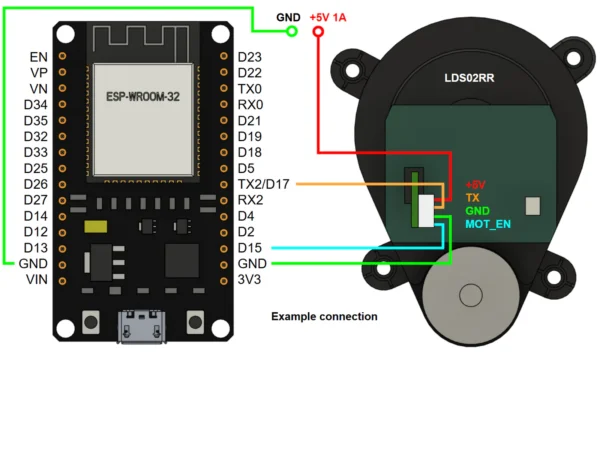
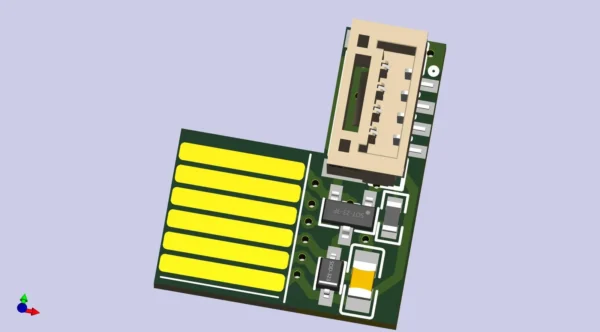
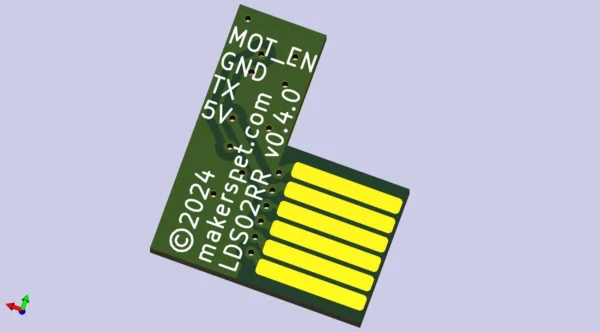
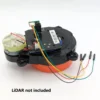
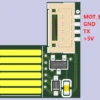
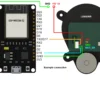
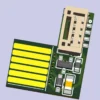
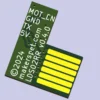
The adapter connects to a micro-controller using a 4-pin connector. Please refer to the product illustration and schematic for the pinout reference. The 4-pin connector signals include
- TX, from LDS02RR lidar, 3.3V TTL
- MOT_EN(PWM), from micro-controller, a 3.3V TTL signal that enables (logic high) and disables (logic low) the LiDAR’s motor. This signal should have a frequency of several KHz. The micro-controller varies this signal’s duty cycle to control the LiDAR motor speed. Maintain the LiDAR motor speed to keep the LDS02RR “puck” making around 5 rotations per second (5Hz) in order for the LiDAR to operate correctly. Slower or faster rotation frequency can cause the LiDAR to stop capturing and outputting the distance measurements.
- GND, the LiDAR and micro-controller ground
- 5V, the LiDAR DC power, on the order of 1A max peak current
Both the hardware and software in this product listing are open source (see links below).
This adapter is version 0.4.
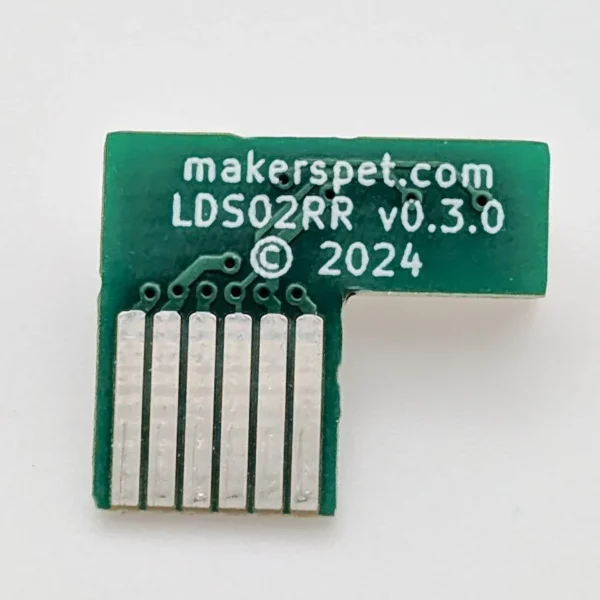
- It is identical in size and operation to v0.3. v0.4 has a more informative silkscreen and a resistor in series with TX for extra safety and signal integrity.
- Compared to the previous v0.2 adapter, v0.4 is slightly smaller in size, uses a more robust (and smaller) connector (JST GH with a lock). Both versions are functionally identical.
Usage
- Read the blog post “How-to: Connect Xiaomi $15 LDS02RR LiDAR to ESP32, Arduino”
- Watch the step-by-step bring-up instructions video “How-to: Stream LDS02RR Lidar distance data live using Arduino, ESP32”
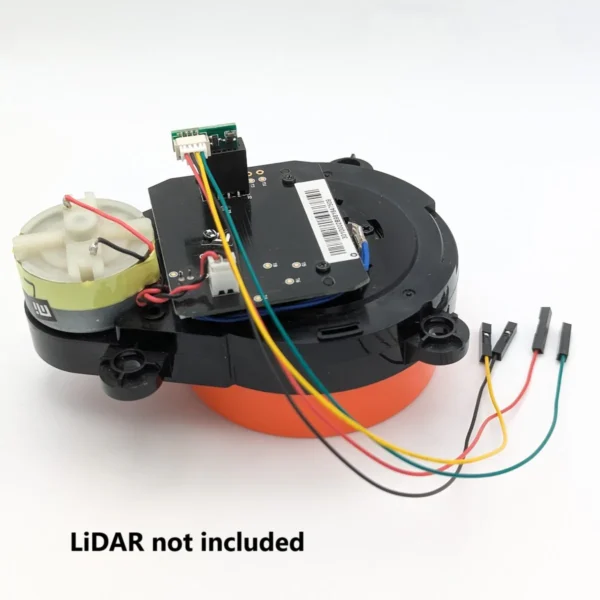
- Insert the LDS02RR adapter PCB into the LDS02RR LiDAR connector. Pay attention to the Adapter orientation! Incorrect orientation can damage the LiDAR and/or the adapter (or your micro-controller). In our particular product illustration, the adapter’s plastic connector must be pointing toward the LiDAR’s center. However, we have seen LDS02RR come in several versions. Different versions of LDS02RR may require different adapter orientations.
- Connect the 4-pin cable JST GH connector to the adapter PCB
- Connect the cable Dupont 0.1″ female connector to a micro-controller – refer to the schematic.
Tip: keep the cable length short for signal integrity purposes.
Available Software
LDS02RR and its adapter work with
- Arduino LDS library supports various LiDAR models including Xiaomi LDS02RR. This example sketch specifically illustrates data capture using LDS02RR, this adapter and an ESP32.
- Kaia.ai is ready-to-use robot software for Arduino/ROS2 robots equipped with a LiDAR, including Xiaomi LDS02RR. Kaia.ai includes firmware (ESP32) and ROS2-based software that runs ROS2 SLAM, Navigation, frontier exploration, etc. out-of-the-box. Kaia.ai supports Maker’s Pet robots including Maker’s Pet Mini.
- Arduino micro-ROS library is available for transferring the captured LiDAR data to a ROS2 PC
Compatible Lidar Hardware
- Xiaomi LDS02RR. LDS02RR is commonly used in older Xiaomi “smart” robotic vacuum cleaners.
- See a photograph here to help you visually identify LDS02RR.
- Note that, as far as I know, there is no publicly available official technical documentation for LDS02RR. Unofficial brief technical specifications for this LiDAR are available here.
Compatible Micro-Controllers and Micro-Computers
- Your micro-controller or micro-computer must have a 3.3V serial input, a 3.3V PWM output and enough computing power in order to interface with the LDS02RR adapter.
- More specifically, the adapter has been tested with ESP32 and ESP32-S3. ESP32-C3 and similar ESP32 micro-controllers (including ESP8266) should work but have not been tested. Arduino-based example software available for these devices.
- Your micro-controller can also be a Raspberry Pi Pico, a powerful-enough STM MCU, an ARM micro-controller, etc. If your MCU runs Arduino, you should be able to reuse the Arduino LDS library. The LDS library is not tied to any particular MCU architecture. However, you may need to modify the example sketch to tailor to your MCU.
- Your micro-computer can be Raspberry Pi, NVIDIA Jetson Nano, etc. I don’t have off-the-shelf LDS02RR software for micro-computers.
Documentation, Files and Instructions
- Step-by-step bring-up instructions video
- Blog post for adapter version 0.2.0
- Demo video
- Download schematic, STEP model here
Technical Support
- Please visit our support forum.
- Browse, file software issues in the Arduino LDS library repo
Product Specifications
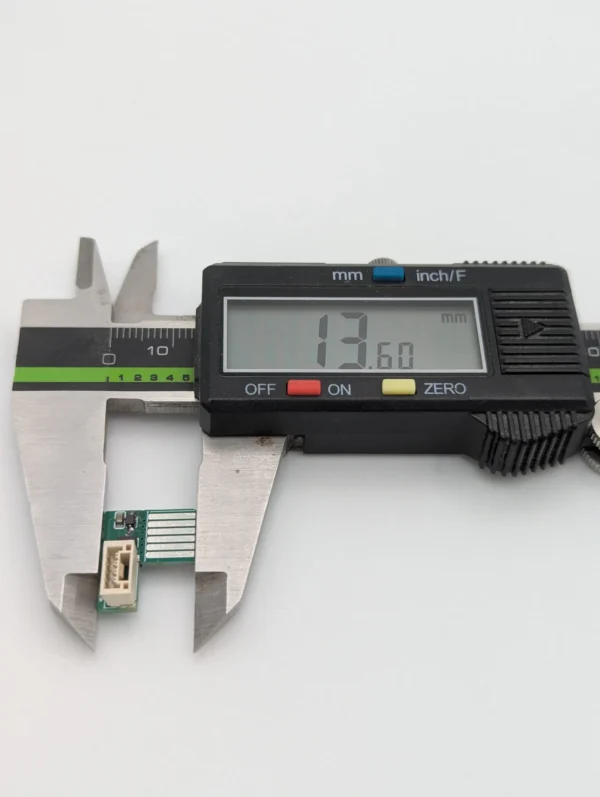
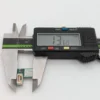
- PCB size approx. 13.6mm x 16mm, 5.4mm height, weight approx. 0.63g
- Cable weight approx. 2.4g
Warnings:
- This product contains small parts. Keep away from small children.
| Weight | 0.05 lbs |
|---|---|
| Dimensions | 2 × 2 × 1 in |
You may also like…
Related products
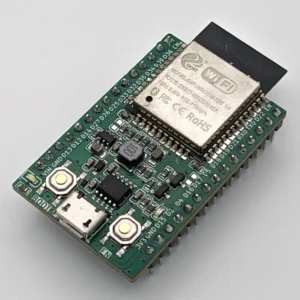
ESP32E 30-pin Development Board
$9.00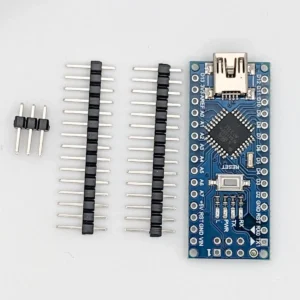
Arduino Nano V3
$5.00Select options This product has multiple variants. The options may be chosen on the product page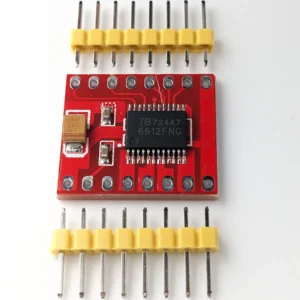
TB6612FNG Motor Driver Breakout Board
Price range: $3.50 through $4.50Select options This product has multiple variants. The options may be chosen on the product page
Reviews
There are no reviews yet.